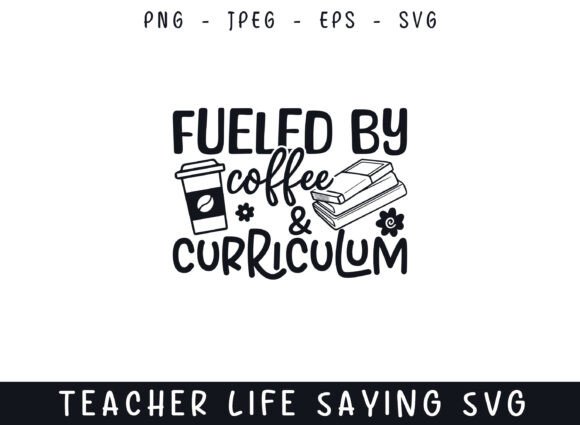
Fueled by Coffee: A Teacher's Embroidered Badge of Honor
When an embroidery design lands in my software for review, I’m not just looking at shapes—I’m imagining the final stitched product. I’m thinking about the fabric it will live on, the hands that will make it, and the person who will ultimately wear or use it. The Fueled by Coffee Curriculum Teacher Life design presents itself as a charming, slightly whimsical declaration. It’s not just a graphic; it’s a mood, a persona. For crafters and makers targeting the teacher community, this is a potent piece of visual shorthand.
The First Stitch: Personality and Practicality
Let’s talk about first impressions. This design has a friendly, approachable energy. The combination of “Fueled by Coffee” with “Curriculum Teacher Life” creates a relatable narrative—it’s celebratory and honest. The description notes it’s made with vector shapes, which is excellent news for embroidery. This means the design should be scalable without losing integrity, crucial for adapting to different projects. The potential for easy color changes, as mentioned, is a huge practical advantage. I immediately envision this on a soft, heather gray sweatshirt for a teacher friend, with the lettering in a deep espresso brown and playful accents in a brighter color.
Where This Design Finds Its Perfect Home
This isn’t a design for every surface, but its thematic strength makes it ideal for specific handmade products. My mind goes straight to personalized gifts and small shop merchandise. Imagine a cozy, embroidered patch applied to a canvas tote bag for carrying lesson plans. Think about it stitched neatly onto the corner of a soft blanket, a gift for a retiring educator. It would shine on a custom apparel item like an apron for a classroom volunteer or a pillow cover for a teacher’s reading nook. For Etsy sellers and creative entrepreneurs, this design translates easily into product mockups for mugs, as noted, but also for tech cases or journal covers—any product that speaks to a teacher’s daily life.
I particularly like it for baby clothes or nursery decor when the teacher is also a new parent. A small, sweet version on a baby onesie, with “Teacher Life” in a gentle script, could be a heartfelt gift. The key is matching the design’s playful yet professional vibe with a product that feels personal and useful.
Navigating the Stitch-By-Stitch Reality
Moving from the idea to the machine, here’s where a designer’s experience comes into play. The promise of 100 vector shapes suggests detail. For embroidery projects, this means paying close attention to stitch density and small details. Before you commit to a client’s order or a batch of craft fair products, test this design on scrap fabric that matches your final material. This is non-negotiable.
Check how the smaller elements, likely in the decorative accents or lettering, translate into satin stitch or fill stitch. On a dark t-shirt, as the description allows for, you’ll need excellent thread color contrast and a robust stabilizer to prevent puckering, especially if the fabric is stretchy. On a structured item like a tote bag, the results will be cleaner, but always account for the fabric texture.
Proceed With Care on These Surfaces
Some applications require extra thought. Tiny lettering on very small hoop sizes might lose clarity. If you’re considering it for a cap or hat with a curved surface, ensure the design layout is condensed enough to fit the area without distortion. For items needing frequent washing, like kitchen towels or adult apparel, a denser stitch area could be less durable over time; consider a slightly simplified version or a larger scale so stitches aren’t too packed. Always, always review stitch density in your software preview before hooping up.
The Impact on Your Craft and Your Customer
Using a design like this isn’t just about production; it’s about connection. For a small business owner, offering this as a custom embroidery option signals you understand your customer’s world. It boosts customer trust and buyer engagement because it’s authentically niche. The finished product carries a story, enhancing its giftability and perceived value.
From a professionalism standpoint, a well-executed version of this design, with clean stitches and thoughtful color choices, elevates your handmade presentation. It shows you can handle designs with multiple elements and translate a digital embroidery file into a tactile, high-quality item. For digital product sellers, this design is a strong design asset for printable mockups, appealing directly to a passionate community.
Your Designer’s Checklist Before Hooping
Here’s my quick, practical list for anyone ready to use Fueled by Coffee Curriculum Teacher Life in a real project:
- Test, test, test. Run it on scrap fabric first, mimicking your final project’s conditions.
- Experiment with color palettes for both light and dark fabric backgrounds. The description says it’s possible—verify it.
- Check the licensing terms of the digital embroidery file. Confirm it’s suitable for both personal and commercial projects before selling finished items.
- Inspect the design in your software. Look for any overly dense areas or tiny corners that might need slight adjustment for your specific machine embroidery design process.
- Consider the end product. A detailed design on a baby embroidery item should be smaller and softer; on a sweatshirt embroidery, it can be larger and more bold.
In essence, Fueled by Coffee Curriculum Teacher Life is more than a cute graphic. It’s a ready-made emblem for a beloved profession. When stitched with care onto the right product, it becomes a badge of honor—a small, handmade testament to the hard, coffee-fueled, curriculum-filled days that teachers lovingly navigate. For makers and decorators, it’s a straightforward path to creating something that feels genuinely appreciated.